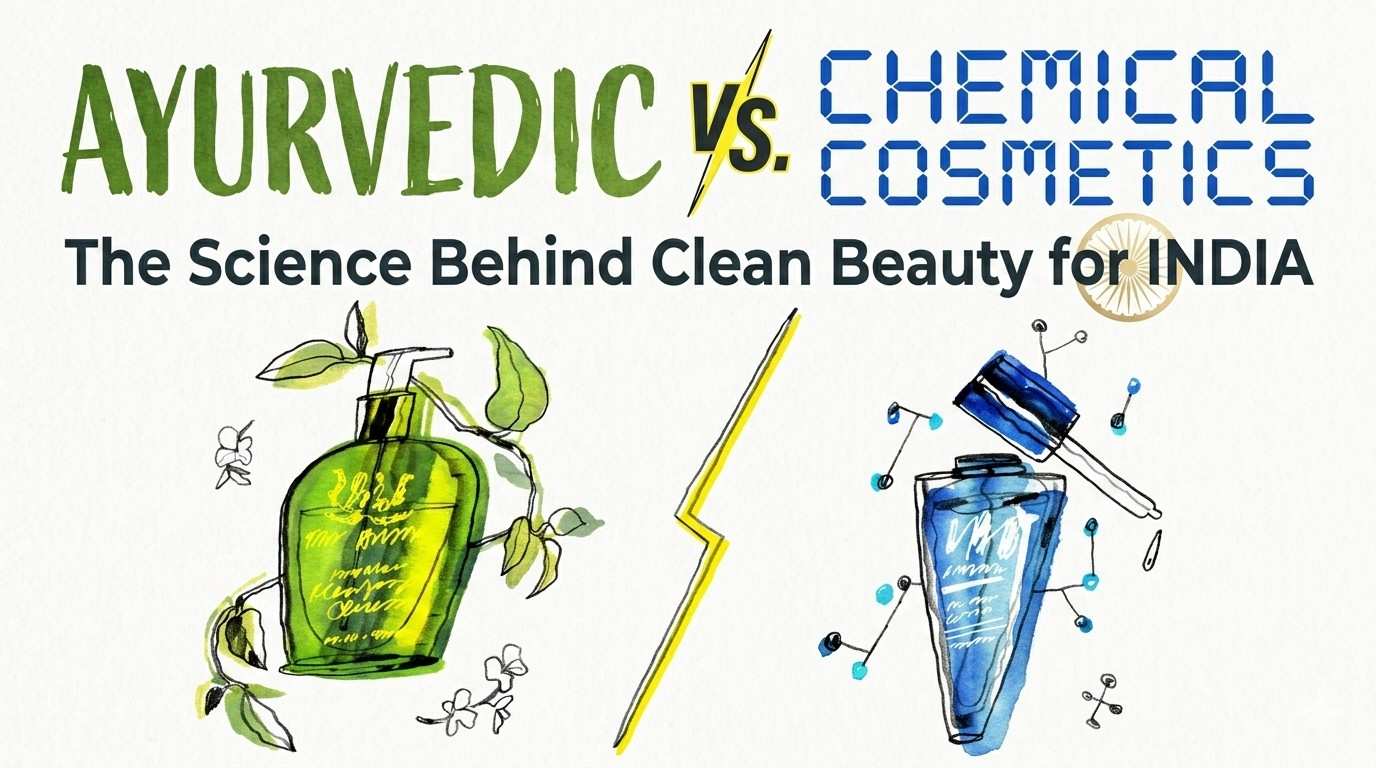
Ayurvedic vs Chemical Cosmetics: The Science Behind Clean Beauty for India
Why This Question Matters for India
Walk into any pharmacy or supermarket in India today and you will find hundreds of beauty products on the shelves. Face washes, moisturisers, serums, sunscreens, hair oils, and body lotions. Almost all of them claim to be natural. Many say they are herbal. Some even say they are Ayurvedic.
But what is actually inside the bottle?
The truth is that the beauty industry in India is one of the least regulated in the world when it comes to ingredient labelling. Products that say “natural” on the front often have a list of chemical compounds on the back that most people cannot read or understand. And the ones that say Ayurvedic sometimes contain less than five percent of any actual herbal ingredient.
This is not a small concern. The average Indian woman applies up to twelve different cosmetic products every single day. Each product has multiple ingredients. That adds up to over 150 different chemical compounds entering your body through your skin daily. Some of these are completely safe. Others are not.
“Your skin does not just sit on top of your body. It absorbs what you put on it. The question is whether what you are putting on it is doing you good or harm.”
India also has a 5000 year old tradition of plant based beauty and wellness called Ayurveda. This tradition understood skin and hair care long before laboratories existed. So the question is worth asking properly: what does modern science actually say when it compares Ayurvedic cosmetics with chemical ones?
What Chemical Cosmetics Actually Contain
Most mass market beauty products use a combination of synthetic compounds to preserve shelf life, create texture, produce foam, and carry fragrance. Many of these ingredients are approved by regulatory bodies. But approved does not always mean safe for long term daily use.
Here are the most common ones you will find in the products currently in your bathroom:
Parabens
These are preservatives used in face washes, moisturisers, and shampoos. Common types are methylparaben and propylparaben. Research has found parabens in breast tissue samples. They mimic estrogen in the body, which means they can interfere with your hormonal system over time. The EU has restricted several parabens. India has not followed with similar restrictions.
Sodium Lauryl Sulfate and Sodium Laureth Sulfate
These are what create foam in your face wash and shampoo. They are very effective at cleaning. But they are also very effective at stripping the natural oils from your skin and scalp. This disrupts the skin barrier, making your skin more reactive to other chemicals and more prone to dryness and irritation.
Phthalates
These are used to carry fragrance and make products feel smooth. They are rarely listed by name on a label. Instead you will see the word fragrance or parfum, which can legally contain dozens of undisclosed chemicals including phthalates. Like parabens, phthalates are classified as endocrine disruptors.
Formaldehyde and Formaldehyde Releasers
Used as a preservative in nail polish, hair straightening treatments, and some lotions. The International Agency for Research on Cancer classifies formaldehyde as a known human carcinogen. Many salon treatments popular in India contain this compound.
Synthetic Fragrances
Fragrance is the number one cause of contact dermatitis and skin allergies from cosmetics. A product listed as fragrance free is not the same as unscented. Unscented products may still contain masking fragrances. This distinction matters a great deal for people with sensitive skin.
Mineral Oil and Petrolatum
These are petroleum byproducts used as moisturisers in many baby oils, cold creams, and lip balms. They do not nourish the skin. They coat it. Poorly refined mineral oil can contain polycyclic aromatic hydrocarbons, which are carcinogenic.
The issue with all of these is not that a single use will harm you. It is that you are using these products every single day for years or decades. The cumulative exposure is what matters. And for the Indian consumer who is buying affordable mass market products, exposure to these compounds is very high.
What Ayurvedic Cosmetics Are Built On
Ayurveda is not just a collection of home remedies passed down through generations. It is a full system of medicine with detailed frameworks for understanding skin type, body constitution, seasonal changes, and how plants interact with the human body.
Ayurvedic cosmetics are built on the concept of the five elements or Panchatatva. Every ingredient is chosen based on its properties in relation to the three doshas: Vata, Pitta, and Kapha. What this means in practice is that the right Ayurvedic formulation for your skin depends on your specific body type and the specific problem you are trying to address.
This is a deeply personalised system. A truly Ayurvedic cosmetic is not one size fits all. It is matched to the individual.
The base of most genuine Ayurvedic cosmetics comes from one or more of the following:
- +Cold pressed plant oils like sesame, coconut, and almond as carriers
- +Herbal powders like sandalwood, turmeric, and neem for active benefit
- +Plant extracts and decoctions like aloe vera, rose water, and tulsi
- +Natural waxes like beeswax and carnauba for texture without synthetic emulsifiers
- +Clay minerals like Multani mitti for deep cleansing
The challenge with Ayurvedic cosmetics today is that the market is full of products that use the word Ayurvedic as a marketing claim while using largely chemical formulations with a token herbal ingredient added. A truly clean Ayurvedic product will have a short ingredient list, recognisable ingredient names, and no parabens, sulfates, or synthetic fragrances.
Brands like Panchatatva Cosmetics have built their entire product line on this principle. Zero parabens, zero sulfates, and formulations sourced from certified sustainable farms. This is what genuine Ayurvedic cosmetics should look like.
The Science Behind Ayurvedic Ingredients
One of the most common arguments against Ayurvedic cosmetics is that they are not scientifically proven. This was true some decades ago. It is not true anymore. A growing body of peer reviewed research now validates what Ayurveda has known for thousands of years.
Turmeric
Curcumin, the active compound in turmeric, is one of the most studied natural anti inflammatory compounds in the world. Studies published in the Journal of Clinical Immunology confirm that curcumin reduces skin inflammation, speeds up wound healing, and inhibits the enzyme responsible for post inflammatory hyperpigmentation. This is why turmeric has been used as a beauty ingredient in India for centuries.
Neem
Azadirachtin and other compounds in neem have proven antibacterial, antifungal, and antiviral properties. Research shows neem extract inhibits the growth of Propionibacterium acnes, the bacteria responsible for acne. It also reduces sebum production, making it effective for oily and acne prone skin.
Aloe Vera
Aloe contains over 75 active compounds including polysaccharides, enzymes, and salicylic acid. Studies confirm it accelerates wound healing, reduces sunburn inflammation, and provides deep hydration without clogging pores. It also contains anthraquinones that have mild natural exfoliating properties.
Sandalwood
Alpha and beta santalol, the active molecules in sandalwood, have been shown to reduce skin inflammation by blocking specific inflammatory pathways. Sandalwood also has a natural mild fragrance that does not trigger the allergic reactions commonly caused by synthetic fragrance compounds.
Bakuchiol
This is one of the most exciting natural skincare discoveries of the last decade. Bakuchiol is derived from the Babchi plant used in Ayurveda for centuries. A 2019 study in the British Journal of Dermatology found that bakuchiol performed as well as retinol in reducing wrinkles and improving skin texture, without the irritation, dryness, or sun sensitivity that retinol causes.
Ashwagandha
Withanolides from ashwagandha reduce oxidative stress on skin cells. Oxidative stress is one of the main causes of premature skin ageing. Regular topical application of ashwagandha extract has shown improvements in skin moisture and reduction of fine lines in clinical studies.
The science is there. The problem is that India has been conditioned by decades of advertising to associate white cream in a foreign looking tube with effectiveness, and to see natural ingredients as old fashioned or slow acting. That perception is now changing as more people demand transparency about what goes into their products.
How Chemical Cosmetics Affect Indian Skin
Indian skin is not the same as the skin that most global cosmetic products are developed for. Most of the research and development behind global beauty brands happens in North America, Europe, and Japan. The reference skin type in those markets is lighter, drier, and less oily than Indian skin.
Indian skin has higher melanin content, which provides some natural protection from UV radiation but also makes it more reactive to certain chemical compounds. Here is what that means in practice:
Chemical Lightening Agents
Products containing hydroquinone, kojic acid, and mercury are widely sold in India as fairness creams and brightening serums. Hydroquinone in high doses causes a condition called ochronosis, where skin becomes permanently darker and discoloured. Mercury is a neurotoxin. The FSSAI has issued warnings, but enforcement remains patchy and many of these products continue to be available freely.
Post Inflammatory Hyperpigmentation
Indian skin is more prone to post inflammatory hyperpigmentation than lighter skin types. This means that any product that irritates or inflames the skin will leave behind dark marks. Chemical irritants in cheap cosmetics frequently trigger this response. What starts as a mild reaction turns into a persistent dark patch that takes months to fade.
Disrupted Skin Barrier
The tropical climate in most parts of India means the skin already deals with high humidity, pollution, and heat stress. Harsh sulfates strip the natural lipid barrier that protects the skin. Once this barrier is disrupted, pollution particles, bacteria, and allergens penetrate more easily. This is why many people in Indian cities experience a cycle of oily skin, breakouts, harsh cleansing, more dryness, and more breakouts.
Hormonal Disruption
Endocrine disrupting chemicals like parabens and phthalates are absorbed through the skin and enter the bloodstream. Over time this can affect hormone levels. Hormonal imbalance shows up on skin as acne, unexplained hair loss, and irregular pigmentation. Many people treating these symptoms with more chemical products are actually making the underlying problem worse.
Why Ayurvedic Formulations Work for Indian Skin
Ayurveda was developed in India, by Indian practitioners, for Indian bodies, in the Indian climate. This is not a coincidence. The ingredients, formulations, and application methods in Ayurveda are calibrated for the kind of skin and health conditions that are most common on the Indian subcontinent.
Adapted for the Indian Climate
Ayurvedic skincare accounts for seasonal and climate changes. The use of cooling ingredients like sandalwood and rose water in summer and nourishing oils in winter is based on the same understanding of dosha balance that traditional practitioners used. This seasonal calibration is something global cosmetic brands simply do not offer.
Anti Ageing Without Irritation
Many traditional Ayurvedic ingredients are potent anti ageing compounds. Kumkumadi oil, a traditional formulation containing saffron, licorice, lotus, and red sandalwood, has been shown in studies to reduce hyperpigmentation and improve skin radiance. Unlike chemical retinoids, it does not cause peeling or sun sensitivity.
Addresses Root Causes
Chemical cosmetics are largely designed to address surface symptoms. Ayurvedic formulations are designed to address the underlying imbalance. This is why results from genuine Ayurvedic skincare tend to improve steadily over weeks and months rather than providing a quick fix that stops working when you stop using the product.
Safe for Daily Use
Because Ayurvedic ingredients are food grade or close to it, they are safe for long term daily use without accumulation of harmful compounds in the body. A neem and turmeric face pack used every day for a year does not accumulate toxins. A paraben loaded moisturiser used every day for a year does.
Your Skin Is a Window to Your Health
Here is something that most beauty brands will never tell you. The state of your skin is not just a cosmetic issue. It is a health issue. Persistent acne, unexplained rashes, dark patches, unusual dryness, premature ageing, and hair loss on your scalp are all messages from your body. They are symptoms. And symptoms need to be understood, not just covered up.
Healthcare professionals who take a holistic approach to the body understand this well. The connection between skin health, oral health, gut health, and hormonal balance is well established in medical literature. A person with chronic gum inflammation often shows signs of systemic inflammation that also appears on the skin. A person with nutritional deficiencies will show it in both their teeth and their complexion.
Chemical cosmetics that disrupt hormones or cause allergic reactions do not stay contained in the skin. They create ripple effects through the body. And the longer you use them without understanding what they are doing, the harder those effects are to reverse.
“Treating a skin symptom without understanding its cause is like turning off the fire alarm instead of putting out the fire. The underlying problem stays.”
A complete health consultation with a doctor who looks at your overall picture can tell you a great deal about why your skin behaves the way it does. This kind of insight is what separates surface treatment from genuine care.
What to Look For When Choosing Clean Beauty
Making the switch to cleaner cosmetics does not have to be overwhelming. You do not need to throw out everything in your bathroom at once. Start by understanding labels and making better choices the next time you run out of a product.
Here is a simple framework to follow:
What to Avoid
- AvoidAny ingredient ending in paraben such as methylparaben, ethylparaben, propylparaben, or butylparaben
- AvoidSodium lauryl sulfate and sodium laureth sulfate in face washes and shampoos
- AvoidThe words fragrance or parfum in the ingredient list without further disclosure
- AvoidDMDM hydantoin, imidazolidinyl urea, and quaternium compounds which release formaldehyde
- AvoidPolyethylene glycol compounds often listed as PEG followed by a number
- AvoidHydroquinone in brightening or fairness products
- AvoidAny ingredient with the word petroleum or petrolatum
What to Look For
- +Short ingredient lists where you recognise most of the words
- +Base ingredients like aloe vera juice, rose water, or coconut oil as the first few listed items
- +Herbal extracts listed with their scientific names for transparency
- +Products that disclose the percentage of natural or organic content
- +No claim of fragrance free while still smelling of synthetic perfume
- +Brands that share their sourcing and manufacturing practices openly
One practical tool is the Environmental Working Group Skin Deep database, which rates cosmetic ingredients by safety. It is available online and lets you search any product or ingredient to see what the research says about it. This kind of informed approach is what separates conscious buying from impulse buying.
How Panchatatva Cosmetics Can Help
If you are ready to move away from chemical laden products and switch to skincare that is genuinely clean, the challenge is finding a brand you can actually trust. The market is full of products that claim to be natural but are not. Finding a brand that is transparent about its ingredients, its sourcing, and its formulation process is harder than it should be.
Panchatatva Cosmetics was built to solve exactly this problem. Founded on the five principles of Ayurveda and established since 2008, Panchatatva formulates every product with zero parabens, zero sulfates, and zero synthetic fragrances. Every herb used is sourced from certified sustainable farms where the supply chain is known from root to bottle.
The Panchatatva approach combines the 5000 year old wisdom of Ayurveda with modern dermatological science. Products are tested and validated, not just claimed. The result is skincare that delivers visible improvements over weeks, not just a surface effect that disappears the moment you stop using it.
What Makes Panchatatva Different
- +Zero parabens, sulfates, and synthetic fragrances across the entire product range
- +Herbs sourced from certified sustainable farms with full supply chain transparency
- +Formulations validated by modern dermatological science alongside Ayurvedic principles
- +Products designed specifically for Indian skin types and the Indian climate
- +Visible skin improvements within weeks of consistent use
Choosing cleaner products is not just a lifestyle choice. It is a health decision. Every product you stop using that contains endocrine disruptors is one less source of accumulated chemical exposure for your body. Panchatatva makes it straightforward to make that switch without compromising on effectiveness.
The Bottom Line
The debate between Ayurvedic and chemical cosmetics is not really about tradition versus modernity. It is about what is actually good for your skin, your body, and your long term health.
Modern science is increasingly confirming what Ayurveda understood for thousands of years. Turmeric fights inflammation. Neem kills bacteria. Bakuchiol reduces fine lines without side effects. These are not just grandmother's remedies. They are scientifically validated compounds that work.
Chemical cosmetics are not all bad. But many of the most commonly used synthetic ingredients in mass market products carry real risks with long term daily exposure. Parabens disrupt hormones. Sulfates damage the skin barrier. Synthetic fragrances cause allergies. Indian consumers deserve to know this.
The clean beauty movement is not a trend. It is a correction. After decades of being sold products that prioritised shelf life, foam, and fragrance over actual skin health, consumers are asking better questions and making better choices.
Your skin is your largest organ. It absorbs what you put on it. It reflects what is happening inside your body. Treating it with the respect it deserves, starting with what you choose to put on it every day, is one of the simplest and most powerful things you can do for your health.
“Clean beauty is not about being perfect. It is about being informed. When you know what is in your products, you can make choices that actually serve your health rather than work against it.”
Your skin deserves products that are honest about what they contain. If you are ready to make that switch, Panchatatva Cosmetics is a good place to begin.