
Global War, Gas Crisis & the Indian Stock Market
Introduction: A Faraway War, A Real Problem In India
On February 28, 2026, a major war-like situation started in the Middle East. After military strikes and retaliation, commercial ships stopped moving freely through the Strait of Hormuz.
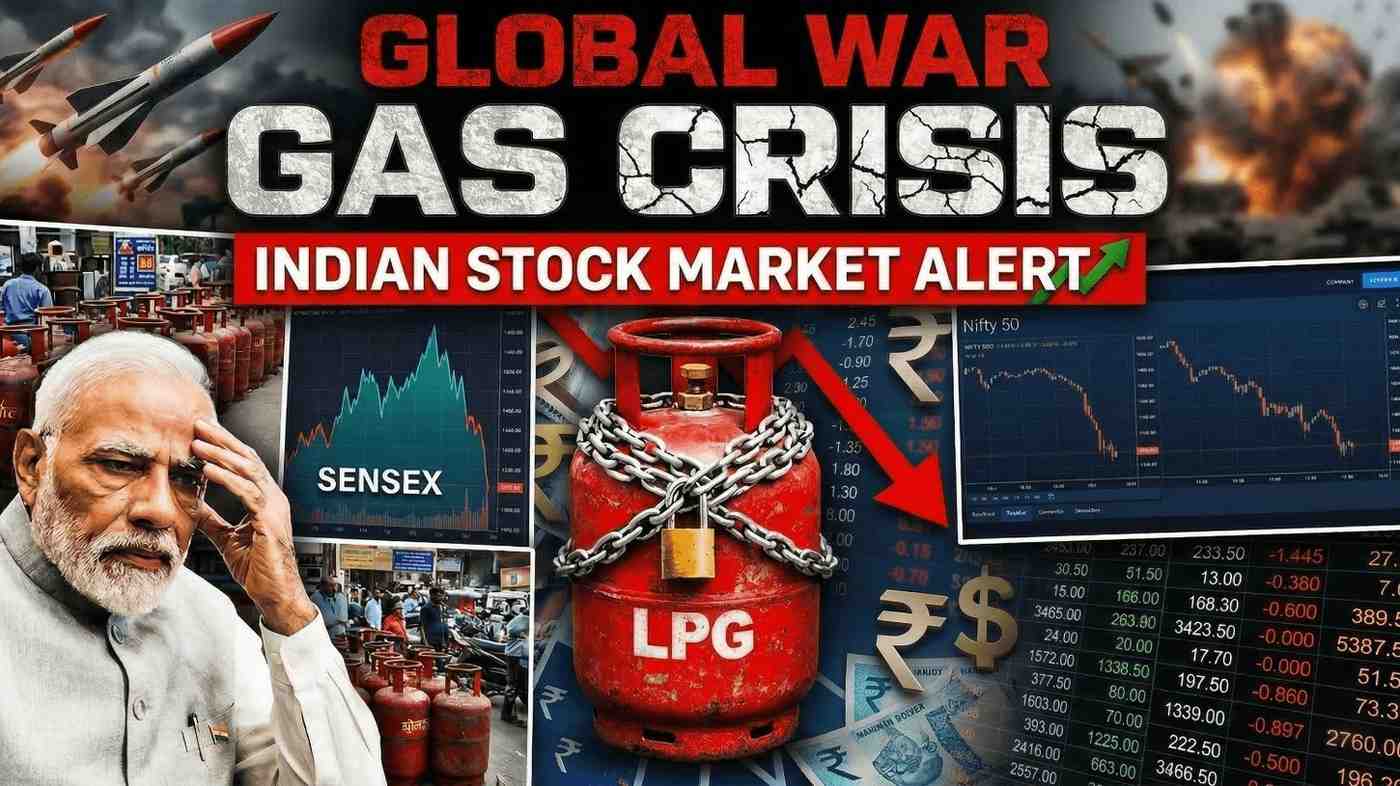
India did not start this conflict, but India is facing the impact. By March 17, 2026, Nifty 50 had fallen about 8%, the rupee touched a record low near Rs 92.56 per dollar, crude oil went close to $100 per barrel, and stock investors lost large wealth.
In many cities, restaurants are struggling to get LPG, households are booking cylinders in panic, and business owners are looking for backup options. In this article, we explain in simple terms what is happening, why it matters, and what people and businesses should watch.
Part 1: The Gas Crisis - India's Gas Supply Problem
India is one of the biggest LPG users in the world. We use much more gas than we produce, so we import a large part from other countries.
The main issue is this: most of those imports usually pass through one narrow route, the Strait of Hormuz. When that route gets blocked, India's cooking gas supply can get hit very fast. This affects millions of homes and small businesses.
We can already see this on the ground: long lines at gas agencies, less cylinder availability in some places, and heavy pressure on restaurants where most kitchens depend on LPG.
Families are also worried. Many are buying induction stoves and booking cylinders early, even if their current cylinder is not empty yet.
Part 2: Government Response - Quick, But Challenging
The government acted fast. Refineries were asked to divert more output toward domestic cooking gas, and local LPG production increased in a short time.
Supply is now being managed more tightly state by state. Hospitals and schools are getting priority, checks are happening to stop misuse, and booking rules are stricter to reduce panic buying and hoarding.
India is also trying to buy more gas from countries like the US, Norway, Canada, and Russia. But shipping from far countries takes much longer, so this cannot fix the shortage overnight.
Part 3: What The Stock Market Is Showing
Markets usually react quickly to fear. After this conflict, investors started selling fast, and that pressure showed up across stocks, the rupee, and overall confidence.
- Nifty 50 fell around 8%.
- Sensex fell around 6.5%.
- Rupee dropped to a record low near Rs 92.56 per dollar.
- Large global investors pulled out major funds.
- Market fear and ups and downs increased sharply.
- Total value of listed Indian companies fell sharply.
- Crude oil moved from around $70 to near $100.
Sectors Under Pressure
Auto, aviation, fuel retailers, banks, chemicals, and many mid and small companies are under pressure due to higher costs and weaker demand.
Sectors Showing Strength
Defence, gold, oil producers, kitchen appliance companies, pharma, and daily-use goods are doing better than many other sectors.
Part 4: What This Means For Steel And MGA Group
Steel is still very important for India's long-term growth. It is also a core part of MGA Group's journey throughGopal Steel Imports. The direct impact through Hormuz is smaller for steel than for LPG, but indirect pressure is still real.
- Higher energy prices raise steel production costs.
- A weaker rupee makes imported materials more expensive.
- If growth slows, demand from construction can weaken in the short term.
At the same time, government spending on roads, railways, defence, and ports can support future steel demand. In volatile times, businesses that understand both global events and local supply realities usually do better.
Part 5: What History Says - And Why This Time Feels Different
History shows that markets often recover after global shocks. But this situation still has some special risks that can keep pressure higher for longer.
- Direct US military involvement increases escalation risk.
- This level of disruption in Hormuz is very rare.
- India has oil reserves, but not enough long-term LPG backup.
- If crude stays near $100 for long, inflation can rise and fuel-related businesses can face margin pressure.
If conflict lasts longer, markets can fall more. A negotiated solution is possible, but timing is uncertain.
Part 6: What Investors Can Do Now
MGA Group does not give investment advice. But based on decades of business experience in difficult times, this simple approach can help.
- Do not panic. Panic usually leads to bad decisions.
- Check if your portfolio is too concentrated in sectors badly hit by high fuel prices.
- Watch sectors that are holding up better in this situation.
- Track the rupee because a weaker rupee can increase costs.
- Keep a long-term view on infrastructure-linked sectors.
- Keep learning. Clear understanding is better than emotional reaction.
Part 7: Main Lesson - Prepare Before Crisis
This LPG disruption shows one big truth: preparation must happen before crisis, not during crisis. One cheap and easy supply source may look good in normal times, but becomes risky when the route fails.
This applies to governments, businesses, and families. Multiple supply options, basic financial safety, insurance, and better planning are no longer optional.
This lesson is part of MGA Group's own journey. We built our systems from difficult real-world experience so others can avoid the same pain.
Conclusion
The Strait of Hormuz is a narrow route, but India depends on it heavily for gas and oil. This crisis has shown how risky that dependence can be.
Markets have fallen, the rupee is weak, and many businesses are under pressure. But India has started responding quickly by increasing local output and opening alternative supply routes.
India has handled tough periods before and can do it again. The way forward is simple: stay informed, diversify risk, and plan for resilience.
About MGA Group
MGA Group is a Mumbai-based group with 40+ years of experience in steel, manufacturing, and other industries. Our aim is to help businesses and individuals solve real-world problems using practical knowledge and experience.
For business support, market understanding, or guidance, connect with us through ourcontact page.