Building a Sustainable Business vs Chasing Quick Money
“Quick money asks how fast you can earn. A sustainable business asks how long you can keep earning. Only one of those questions builds something you can hand to your children.”

Two Founders, Same Year, Different Bets
Karan and Meera started trading businesses in the same city in the same year. Both had a little capital, a phone full of contacts and the same restless ambition. By the end of year one, Karan looked like the winner.
He had found a gap: a product in short supply, a distributor willing to bend the rules on invoicing, and a customer who paid quickly if the price was low enough. His monthly numbers were double Meera's. He bought a better phone. He told friends she was being too careful.
Meera was doing slower, duller things. She priced for a real margin even when it lost her a few orders. She filed everything on time, kept two suppliers instead of one, and spent her Sundays calling past customers to ask what she could do better. Her first-year profit was modest, and she was honest about that.
Then the shortage ended. The distributor moved on, the low price no longer beat anyone, and one careless invoice landed Karan in a compliance mess that ate three months of his attention. Meera's customers were still there, her margin still worked and her books were clean. Neither founder was smarter than the other. They had simply made different bets about time, a pattern behind many of the business mistakes we see entrepreneurs repeat.
“The market is generous to people who are early. It is far more generous to people who are still standing.”
What Quick Money Really Looks Like
Quick money rarely announces itself as a scheme. Most of the time it looks like a smart opportunity: a trend to ride, a supplier loophole, a discount war you can “win,” a high-return investment a friend swears by, or a business model that only works while the market is in a particular mood.
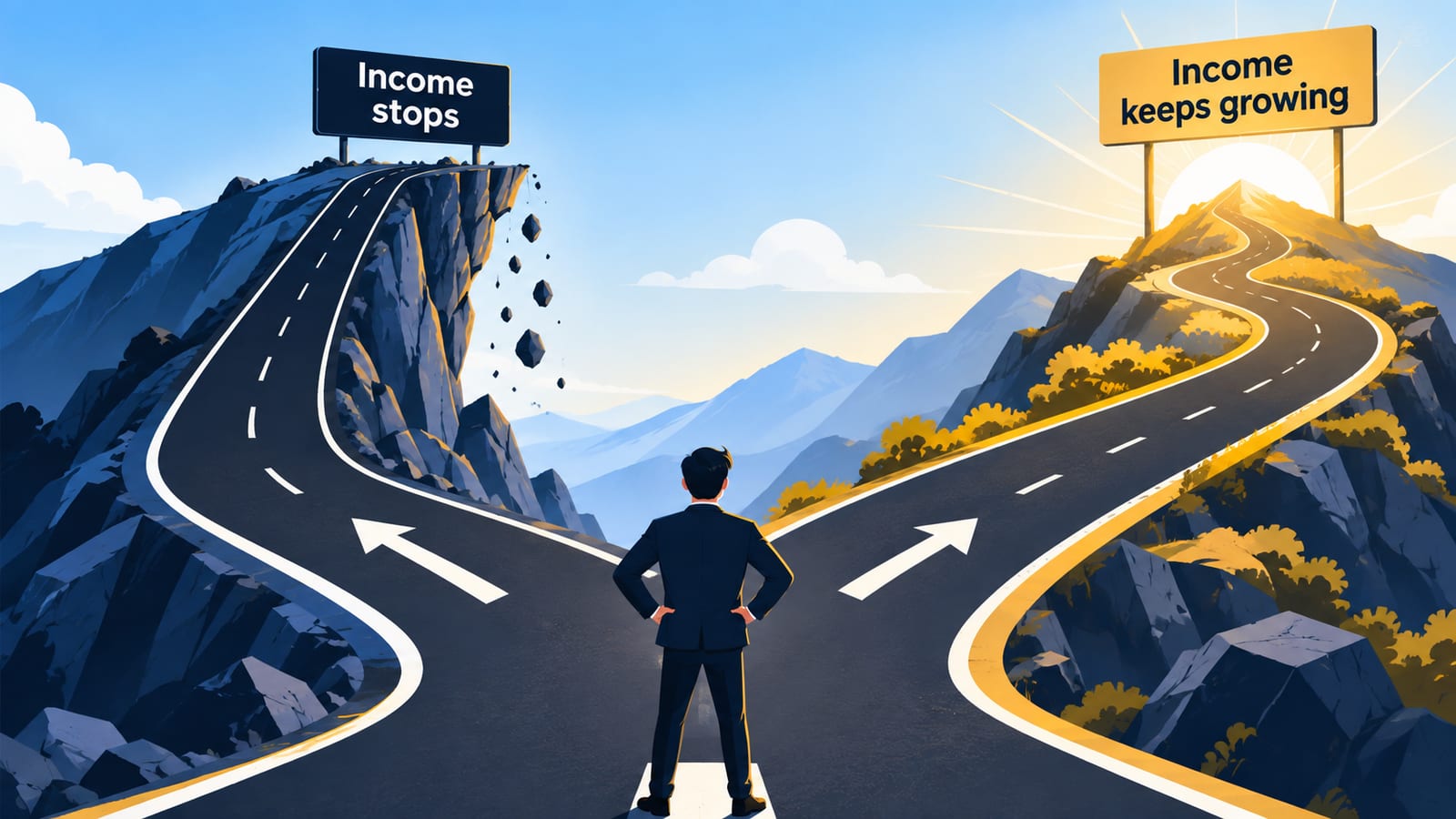
What they share is dependence. The income relies on one condition staying true, whether that is a shortage, a single big client, a temporary price gap or a promise nobody can verify. When the condition changes, the income does not slowly decline. It stops.
That is why regulators keep warning about promises of guaranteed high returns. India's securities regulator publishes investor-awareness guidance at sebi.gov.in, and its central message is one worth pinning above every desk: when the return sounds too good to be true, someone else is carrying a risk you have not been told about.
What “Sustainable” Actually Means
Working definitionA sustainable business can keep earning and serving customers for years without depending on luck, shortcuts or a constant supply of new cash. It has margins that survive bad months, customers who come back, books you are not afraid to open, and systems that keep working when you are away.
Notice what is missing from that definition: growth speed. Sustainable does not mean slow, and it does not mean small. It means the growth is built on things that compound instead of things that expire. We wrote about the other side of this in our piece on why startup failures cluster in the first year: usually not a lack of demand, but a lack of foundation.
The Two Paths Side by Side
| Area | Quick Money Path | Sustainable Path |
|---|---|---|
| Pricing | Cut to win this month's deal | Set for a margin that lasts |
| Customers | One big buyer or constant new ones | Repeat and referred buyers |
| Compliance | Handled when forced | Handled every month |
| Reinvestment | Spent as it arrives | A fixed share into what compounds |
| When conditions change | Income can stop overnight | Income bends but continues |
Why Quick Money Is So Tempting
It would be easy to write this article as a lecture, and it would be unfair. Quick money is tempting because the pressure behind it is real: rent is due, salaries are due, a supplier is chasing payment, and a family somewhere is watching to see whether the business was a good idea.
Under that pressure, a fast rupee is not greed. It is relief. The trouble is that relief and foundation are different products, and a business that only buys relief keeps needing more of it. The central bank regularly cautions the public about unregulated lenders and illegal deposit schemes at rbi.org.in, and those warnings exist because desperate cash flow is exactly when people take terms they would never accept otherwise.
Tip
Build a cash runway before you need it. Even two or three months of fixed costs set aside changes how you decide, because you stop accepting bad deals out of panic.
The same instinct shows up in personal money. Owners who cannot stop chasing quick returns in the business tend to do it in their portfolios too, which is the pattern we described in investment mistakes that quietly cost business owners lakhs every year.
Warning Signs You Are Chasing Quick Money
Almost nobody decides to chase quick money. It happens gradually, so watch for these patterns.
Discounting to Survive
You win deals mostly on price, and your margin has shrunk quietly for months.
One Big Dependency
One client, one supplier or one product carries most of your income.
Model Hopping
You change what the business does every few months, chasing whatever seems hot.
Last-Minute Compliance
Filings, records and paperwork only happen in the final week before a deadline.
Zero Reinvestment
Whatever the business earns gets spent, with nothing set aside for systems, skills or brand.
Judging Only This Month
Success means this month's revenue, and nobody can describe where the business will be in three years.
Four Foundations of a Sustainable Business
If quick money is a trick, sustainability is a structure. It rests on four foundations, and each one is cheaper to build early than to repair later.
Healthy Margins
You earn enough on each sale to absorb a bad month, pay people fairly and still invest.
Repeat Customers
A growing share of revenue comes from people who already know and trust you.
Clean Books
Your records, tax filings and cash position are accurate enough to make decisions from.
Working Systems
Sales, delivery and follow-up happen through documented steps, not through one exhausted person.
Small businesses do not have to build these alone. Government support for micro and small enterprises, including registration and scheme information, is listed at msme.gov.in, and it is worth an hour of your time.

Can You Have Cash Now and a Foundation Later?
Yes, and the best founders do both on purpose. Quick wins are not the enemy. A fast sale that funds a slow investment is one of the smartest moves in business. The mistake is letting quick wins become the whole plan.
Use Fast Money to Buy Slow Assets
When a quick opportunity pays off, decide before the money arrives how it will be split. A simple rule works: keep a portion as runway, put a portion into something that compounds, and only then spend the rest.
Never Let One Stream Carry Everything
Whatever your fastest earner is, treat it as temporary. Build a second and third source of income around it, the discipline we explored in income diversification. A business that can lose its best customer and still pay salaries is a business that has escaped the quick-money trap.
Note
Sustainable does not mean refusing every quick opportunity. It means asking, before each one, what it leaves behind once the money is spent.
A Six-Step Process to Build It
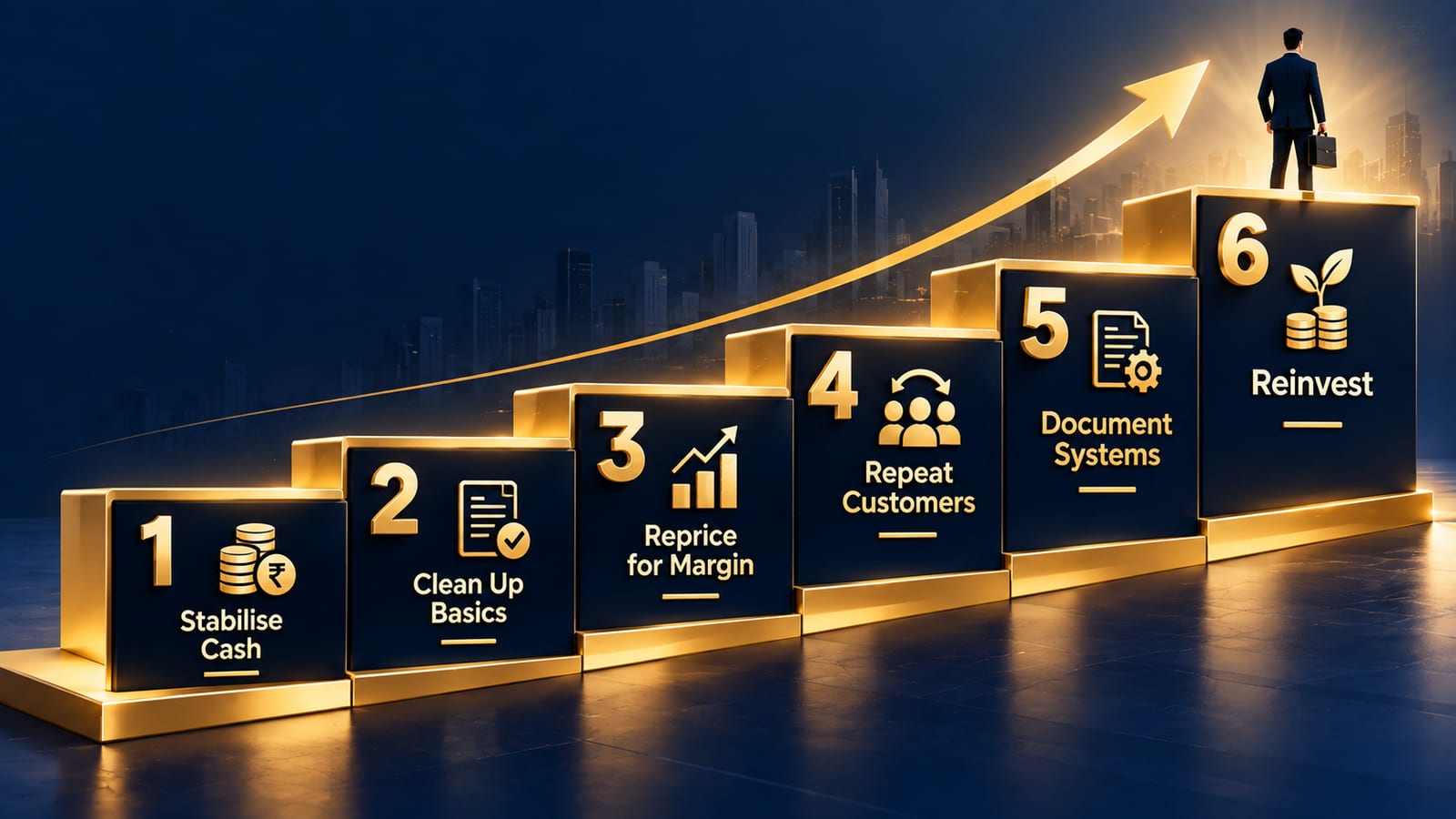
Moving from a quick-money habit to a sustainable business is a sequence, not a personality change. Here is the order that works.
Stabilise Cash First
Build a runway of a few months of fixed costs so that urgent cash never forces a bad decision.
Clean Up the Basics
Fix bookkeeping, invoicing and tax filings so you can see your real profit and sleep without fear of a notice.
Reprice for Margin
Work out what each product or service truly costs, then set prices that leave room for a bad month.
Invest in Repeat Customers
Follow up, ask for feedback and reward loyalty. Keeping a customer costs far less than finding a new one.
Document Your Systems
Write down how sales, delivery and support work so the business no longer depends on your memory.
Reinvest on a Schedule
Move a fixed share of profit every month into growth, skills and reserves, before anything else is spent.
None of this is glamorous, and that is the point. Followed for a few years, it is the same patient logic behind our ₹10 crore roadmap, where each year rests on proof from the one before.
How to Measure Whether It Is Working
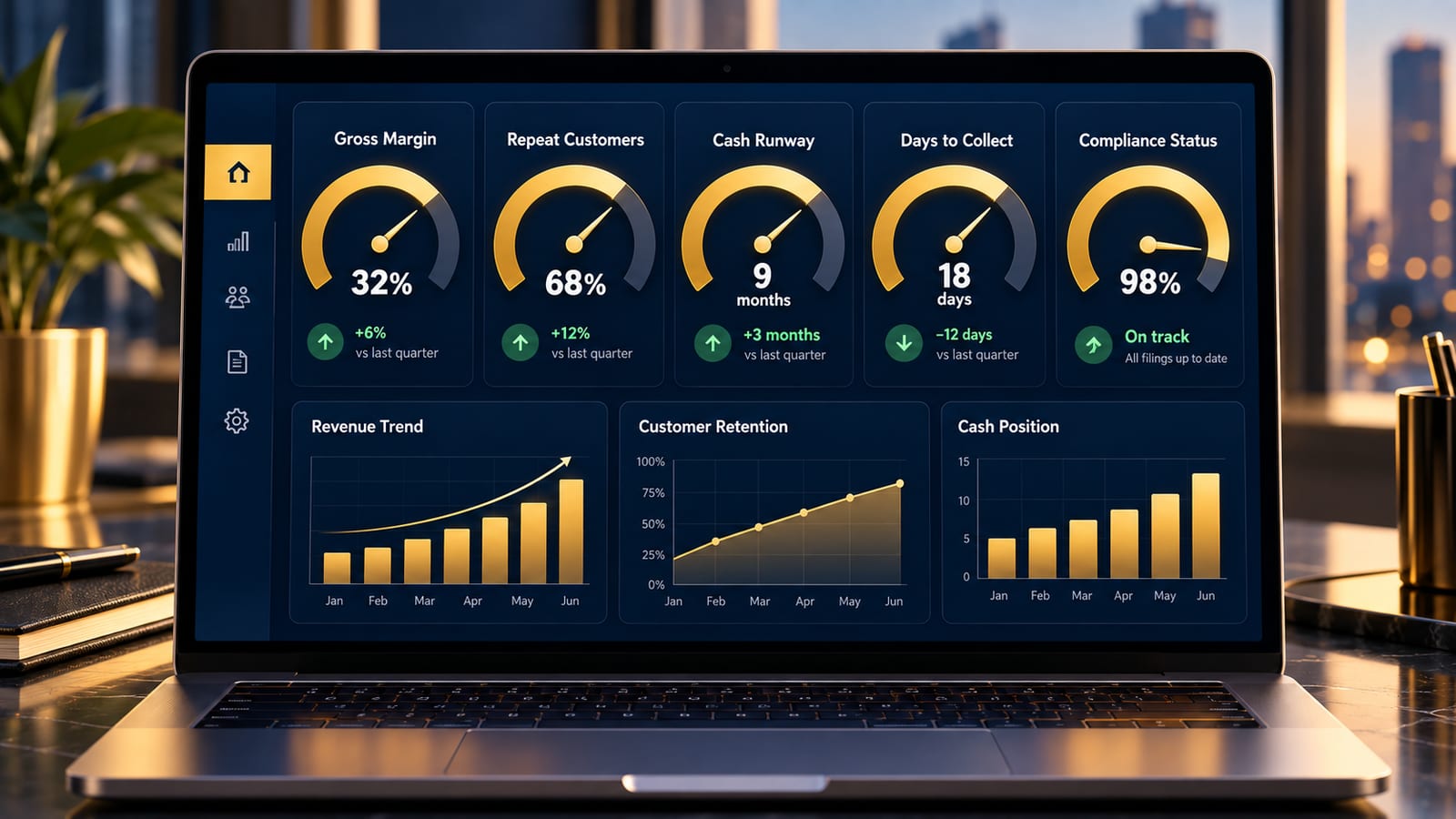
Quick money is measured by this month's revenue. A sustainable business needs a different scoreboard, one that tells you whether the foundations are getting stronger. Five numbers are enough to start.
- Gross margin: how much of each sale you keep after direct costs
- Repeat customer share: the portion of revenue from people who bought before
- Cash runway: how many months you could operate without new income
- Days to collect payment: how long customers take to pay you
- Compliance status: whether every filing and record is current
Review them monthly, side by side with signals from outside the business, the habit we described in market trends. If margin and repeat share are rising while cash runway holds, you are building something real, even in a month when revenue dips.
How MGA Group Can Help
Building foundations touches several parts of a business at once. Here is where MGA Group's network fits.
| What You Need | How We Help | Link |
|---|---|---|
| Clean books, GST and tax compliance without last-minute panic | Year-round tax advisory and filing support that removes compliance debt | Tax Sahi Hai |
| A properly structured business from the start | Incorporation and structuring support, separate from the government's own Startup India scheme | Startup India Initiative |
| A brand and website that bring repeat customers | Web, SEO and marketing built to compound rather than spike | MGA Brand Buzz |
| Healthier margins through lower input costs | Collective buying power on materials and supplies for SMEs | Smart Buying |
| A plan for what to do with profit once it arrives | Structured wealth planning that separates business risk from personal security | Wealth and Beyond |
| A credible base without a heavy fixed lease | Flexible coworking and virtual office space that protects your cash runway | MGA Properties |
Frequently Asked Questions
What is a sustainable business?
A sustainable business is one that can keep earning and serving customers for years without depending on luck, shortcuts or constant new cash. It has healthy margins, repeat customers, clean books and systems that do not rely on one person.
Why do quick money schemes fail for business owners?
Quick money schemes usually depend on a single trick, a single customer or a single market condition. When that condition changes, the income disappears, and the shortcuts taken along the way, like unpaid taxes or thin service, leave real costs behind.
Is it wrong to want quick profits in a business?
No. Every business needs cash flow, and quick wins can fund growth. The mistake is building the entire business around quick wins instead of using them to pay for a durable foundation.
How do I balance cash flow and long-term growth?
Split your attention deliberately. Protect a cash runway first, then commit a fixed share of profit each month to things that compound, such as customer relationships, systems, brand and skills, rather than spending whatever is left over.
What are the signs a business is chasing quick money?
Common signs include constant discounting to close sales, ignoring compliance until a deadline, changing the business model every few months, depending on one big client, and measuring success only by this month's revenue.
How long does it take to build a sustainable business in India?
There is no fixed timeline, but most businesses need two to three years of consistent execution before margins, repeat customers and systems start working together. Progress is usually slower at first and faster later.
Can a small business be sustainable without a big budget?
Yes. Sustainability is about discipline, not size. Clean bookkeeping, fair pricing, good service and steady reinvestment cost little and matter more than a large marketing budget.
How can I check if an investment or scheme is too good to be true?
Be wary of guaranteed high returns, pressure to decide quickly and unregistered promoters. Verify registration and read investor-awareness guidance from regulators such as SEBI and the RBI before putting money in.
Final Thoughts
Karan and Meera are still both in business, which is the interesting part. Karan learned the hard way and rebuilt on firmer ground. Meera kept compounding. The lesson is not that quick money makes you a villain or that patience makes you a saint. It is that only one of these paths still works after the conditions change.
Build the thing that keeps earning when nobody is watching, and let the fast wins pay for it. That is how a business grows into something you can pass on, the long game behind generational wealth.
Build Something That Lasts
From clean compliance and structure to marketing, margins and wealth planning, MGA Group's network can help you build the foundations, not just the next quick win.
Get In Touch